SkillRise Spark
Work-ready essentials

Safety & wellbeing

Health, safety and hygiene on shift

Spot a hazard before it becomes an accident, know what you are legally owed, and understand why reporting a near-miss protects you.

About 10 minutes · Step 1 of 6 in work-ready essentials

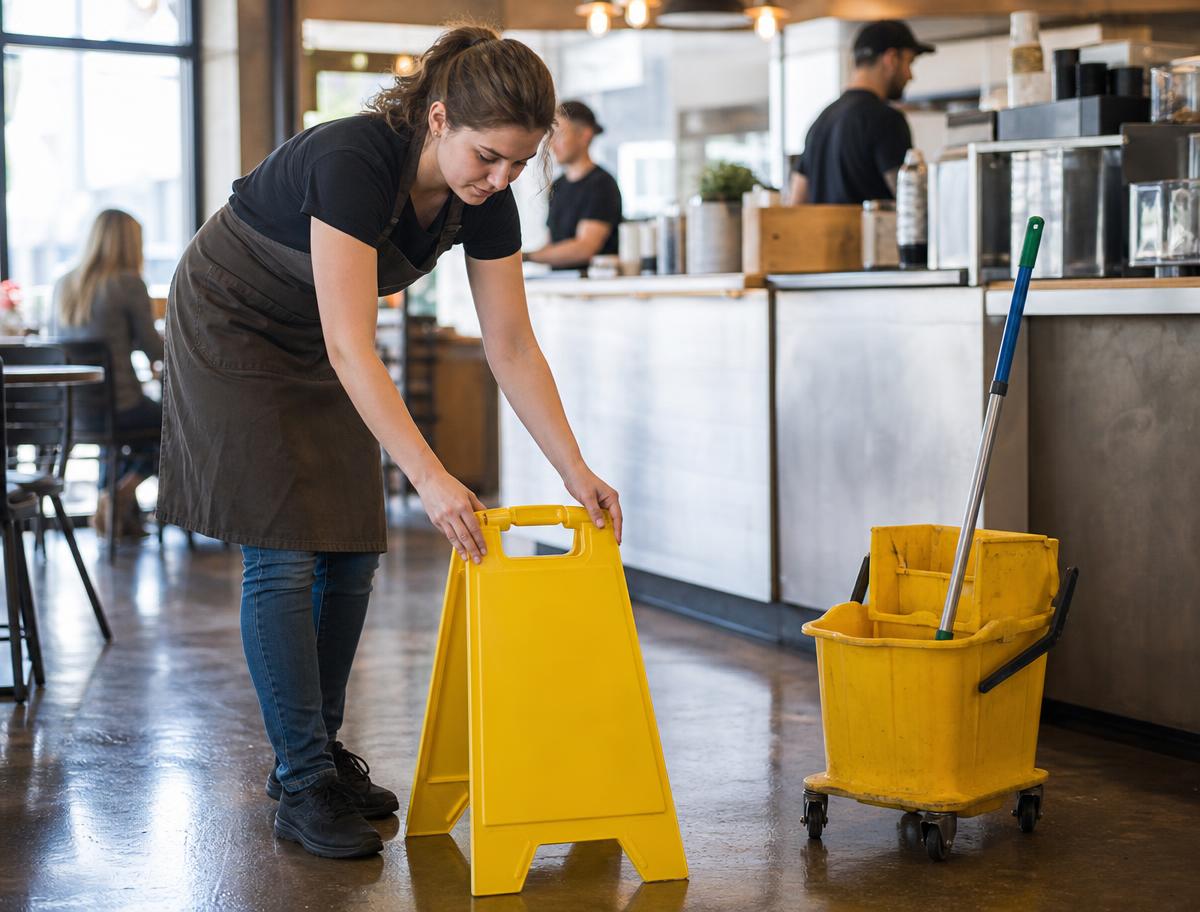
A café worker placing a yellow caution sign next to a mop and bucket

Safety is a shared legal duty

Your employer must give you a safe place to work, free training, the right equipment and someone to report to. You must follow that training, use the equipment properly, and tell someone when something is not right. Neither side gets to opt out.

  • You should never be charged for required protective equipment.
  • You must be trained before using slicers, fryers, ladders, chemicals or machinery.
  • You should be shown where the first aid kit, incident log and emergency exits are on day one.
  • You cannot be punished for raising a genuine safety concern.

The five-second hazard scan

Most workplace injuries come from a handful of repeat causes. Run this scan when you walk in and again after every rush.

  • Slips and trips: wet floor, trailing cable, box in a walkway, worn mat.
  • Manual handling: anything you would strain to lift alone — split it or get help.
  • Burns, blades and chemicals: hot surfaces, unguarded knives, unlabeled sprays.
  • Blocked exits and fire doors propped open.
  • Tired, distracted or lone-working colleagues — fatigue is a hazard.

Food hygiene basics that transfer anywhere

Even outside catering, the same discipline shows an employer you can follow a procedure exactly. Wash hands properly and often, keep raw and ready-to-eat apart, cool and store at the right temperature, label and date, and never serve something you are unsure about.

  • Temperature and cleaning checks get recorded at the time — not remembered later.
  • Allergens are a safety issue, not a preference. Check the source, do not guess.
  • If you have vomiting or diarrhea, report it and do not work with food until workplace and local health rules allow you to return.

Near-misses and accidents

A near-miss is a free lesson. Report it and the cause gets fixed before someone is hurt. If an accident does happen: make the area safe, get help, then record it in the incident log the same shift, in plain factual language.

Wellbeing counts as safety

Breaks, hydration, safe travel home from a late shift, and being able to say you are struggling are all part of a safe workplace. Burnout causes mistakes, and mistakes cause injuries.

Knowledge check

Quick quiz — 4 questions

Pick an answer to see instant feedback. Every retake shuffles the order and pulls a fresh set from the module question bank.

  1. 1. A tray slips out of your hands but nobody is hurt and nothing breaks. What do you do?

    medium
  2. 2. You arrive for a shift and notice the wet-floor sign is missing from a recently mopped area. What should you do?

    easy
  3. 3. A customer asks whether a cake contains nuts and you're not sure. Best move?

    hard
  4. 4. The fire alarm sounds during a busy lunch service. What comes first?

    medium

0 of 4 answered.

Say this, not that

Language you can borrow.

Asked to do something you are not trained for

Weaker

Okay… I'll give it a go.

Stronger

I haven't been trained on the slicer yet. I can do the prep by hand now, and I'd like to complete the required training this week.

Why it works: Declines the risk without declining the work, and asks for the training that fixes it permanently.

Reporting a hazard

Weaker

The floor is a little slippery over there.

Stronger

There's water pooling by the ice machine — I've put a sign out and mopped it, but it's leaking again. Can we get it looked at today?

Why it works: States what you already did, then names the underlying cause and asks for a fix.

A near-miss you were part of

Weaker

Nothing happened, so no point saying anything.

Stronger

I nearly dropped a hot jug carrying it through the swing door — nobody was hurt, but I think we need a rule about calling through. Should I write it up?

Why it works: Owning a near-miss reads as maturity, not incompetence, and it stops the next one.

Before you move on

  • You know where the first aid kit, incident log and fire exits are
  • You have been shown how to use every piece of equipment you touch
  • You run a hazard scan at the start of shift and after each rush
  • You report near-misses the same day, in writing where possible
  • You know who to tell if you feel unsafe, unwell or unable to cope